In this article
Pilates is a low-impact method built on core strength, controlled movement and breath coordination. This article sets out what the method involves, how the first eight weeks are structured, and the technical errors most common among beginners.
What pilates involves
Pilates is a low-impact exercise method developed by Joseph Pilates in the early twentieth century. It is organised around core strength and stability, controlled and precise movement, breath coordination, and functional movement patterns.
Mat and reformer compared
Mat pilates:
- Bodyweight-based exercises
- Requires minimal equipment - a mat and resistance bands
- Accessible across fitness levels
- Emphasis on core control and stability
- Suitable for practice at home
Reformer pilates:
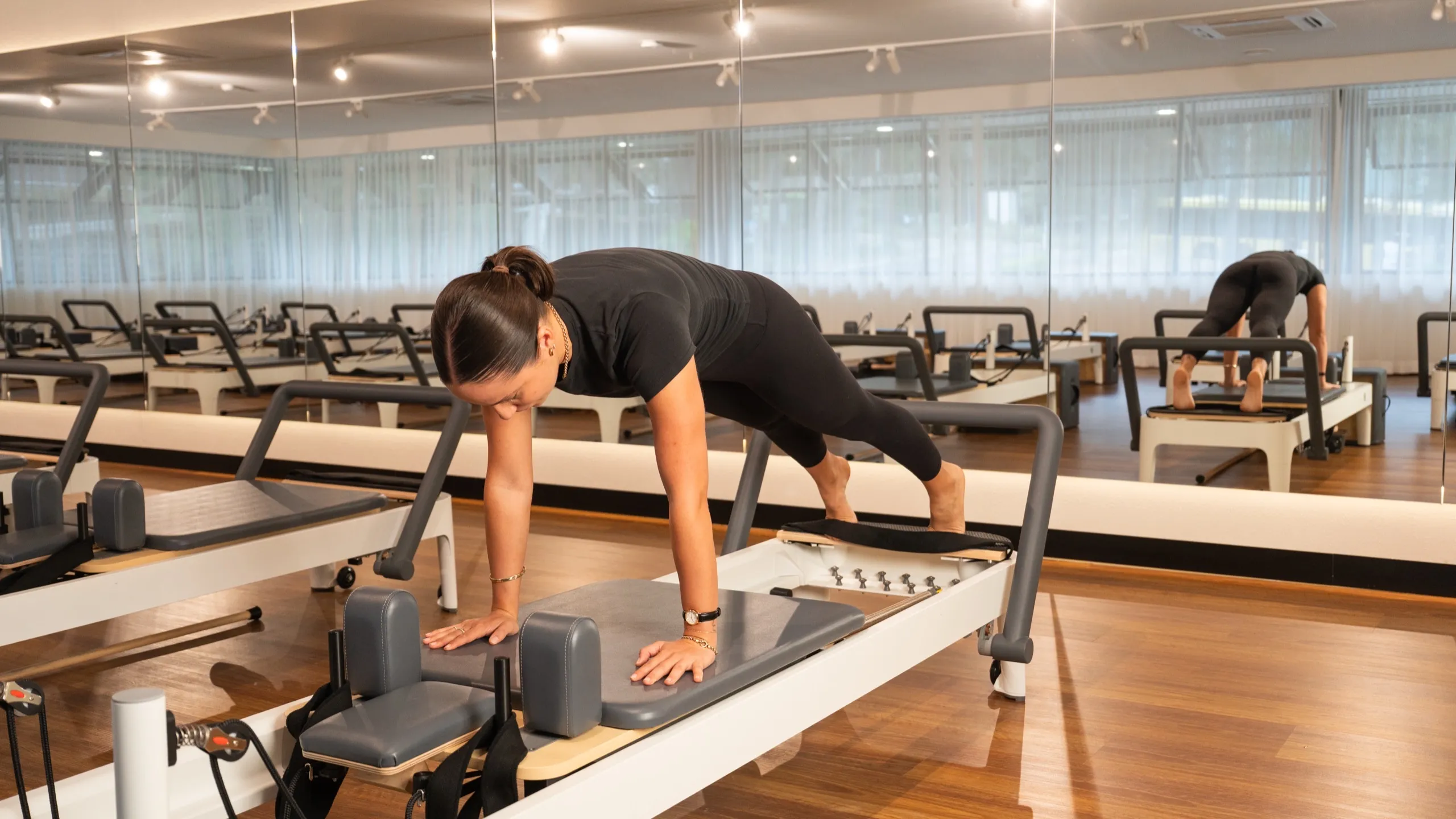
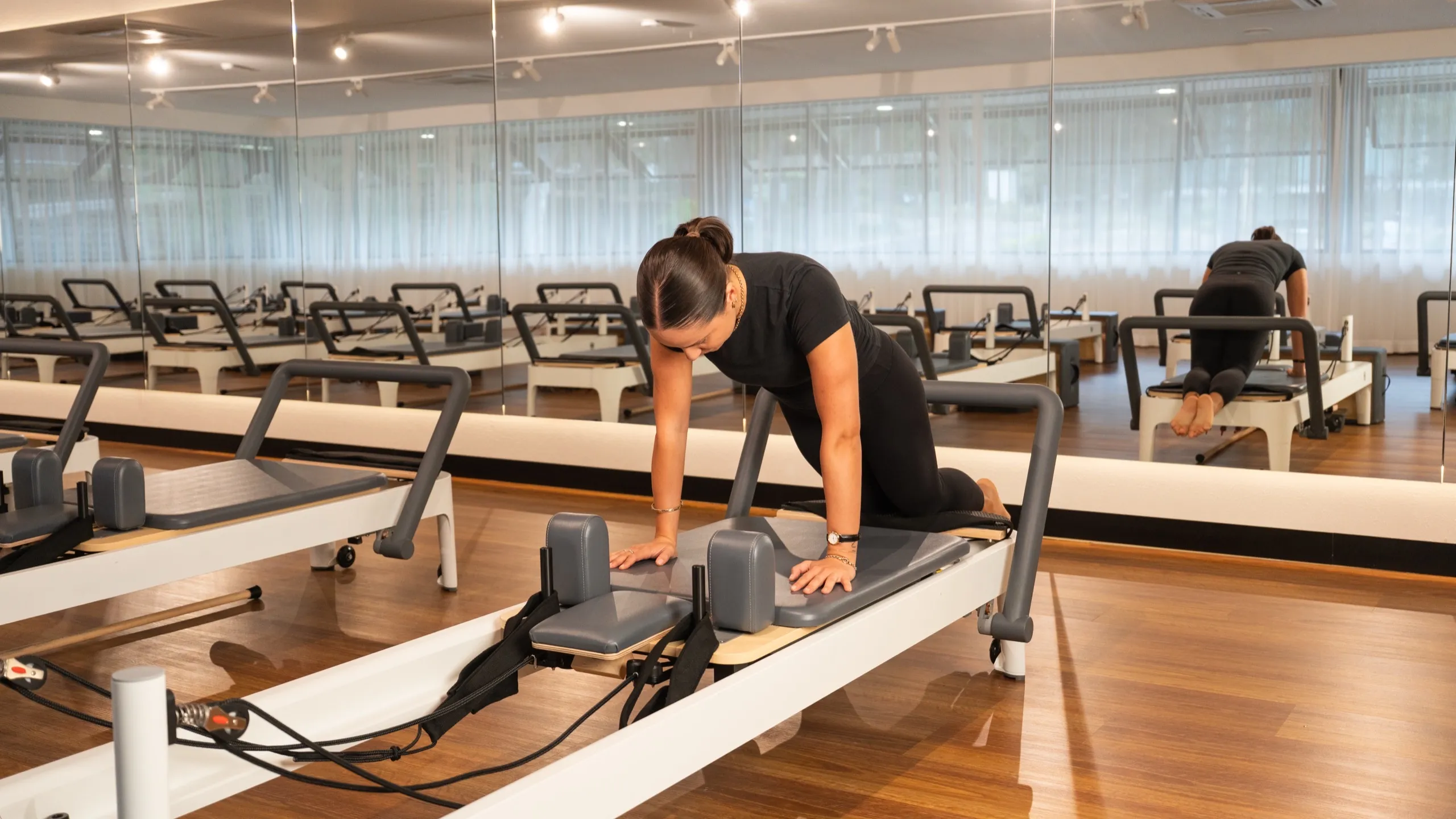
- Uses a specialised carriage with springs and pulleys
- Provides variable resistance
- Offers a wider range of exercise options
- Better suited to progressive loading
- Available at dedicated studios
Both mat and reformer classes are available across the Housed pilates studios, and members commonly move between the two.
What the method develops
Core strength and stability
Pilates requires sustained core engagement, largely because movements are performed slowly and with control rather than at speed.
Principal muscles involved:
- Transverse abdominis - the deep core stabiliser
- Multifidus - spinal support
- Pelvic floor muscles
- Diaphragm
Mobility and range of movement
Regular practice develops range of movement over a period of months, particularly through the hamstrings, hip flexors and thoracic spine. In practical terms this presents as greater available range during gym exercises.
Postural control
Extended periods at a desk or in a vehicle commonly produce forward head position, rounded shoulders, restricted hip flexors and reduced core and glute engagement. Pilates works in the opposite direction: it develops the postural musculature, extends range through restricted areas, retrains movement patterns and builds positional awareness.
Movement quality
The method is low-impact, emphasises movement patterning, develops functional strength and addresses asymmetry between sides. These characteristics are why it is frequently used alongside other training rather than in place of it.
The first eight weeks
Weeks one and two: foundation
The focus is the basic principles and breath coordination, at two to three classes per week.
Content:
- The pilates box - shoulder and hip alignment
- Breath coordination with movement
- Basic mat exercises - The Hundred, Roll Up, Single Leg Stretch
- Reformer fundamentals - footwork, arm work, leg circles
Weeks three and four: consistency
The emphasis moves to developing the connection between intention and muscular engagement.
Exercises introduced:
- Mat - Double Leg Stretch, Criss-Cross, Swimming
- Reformer - Elephant, Long Stretch, leg work variations
Typical progress markers:
- Improved positional awareness
- Core engagement occurring without conscious prompting
- Greater consistency between repetitions
Weeks five and six: progression
Difficulty and control requirements increase.
Exercises introduced:
- Mat - Teaser preparation, Side Kicks, Seal
- Reformer - Short Box series, Pulling Straps, Splits
Typical progress markers:
- Improved balance and coordination
- Smoother, more controlled movement
- Greater available range
- Increased core capacity
Weeks seven and eight: integration
Individual exercises are combined into continuous sequences.
Content:
- Full Teaser
- Boomerang preparation
- Complex reformer transitions
- Increased spring resistance
Commonly reported at this stage:
- Improved performance in other training
- Greater efficiency in running mechanics
- Improved control during gym sessions
Common technical errors
Breath-holding
Holding the breath introduces tension and reduces control. Lateral breathing should be practised, expanding the ribs laterally rather than lifting the chest: inhale through the nose in preparation, exhale through the mouth on the effort, and maintain core engagement throughout.
Excessive speed
Speed reduces control and undermines the precision the method depends on. A count of three to five for each phase of the movement is the conventional guidance.
Inattention to alignment
Poor alignment reduces the effectiveness of each exercise. The reference framework is the pilates box: shoulders aligned over hips, hips aligned over knees, a neutral spine that is neither flattened nor over-arched, and a closed rather than flared ribcage.
Comparison with other participants
Participants differ in body proportion, training history and starting range. Exercises should be modified as required and progression judged against individual baseline rather than against others in the room.
Pilates alongside other training
With gym training
How they complement one another:
- Gym training develops strength; pilates develops control
- Greater available range supports exercise execution
- Positional awareness transfers to loaded movement
A workable split:
- Two to three gym sessions per week
- Two pilates sessions per week
- Pilates scheduled on rest days or following lower-intensity gym sessions
With running
Relevance for runners:
- Core capacity contributes to running economy
- Hip stability supports consistent mechanics
- Postural control supports breathing efficiency
- Available range contributes to stride length
With group training
Commonly reported by group training members:
- Improved functional movement patterns
- Greater core stability across stations
What to wear and bring
Clothing:
- Form-fitting, so that the instructor can observe alignment
- Comfortable and sufficiently flexible
- Bare feet or grip socks, which are available at the studios
- No shoes on the reformer
Provided:
- Reformer machines
- Mats
- Small apparatus - magic circle, resistance bands, balls
Pregnancy and postpartum classes
A number of Housed instructors hold specialist certifications in Pilates for Pregnancy and Safe Return to Exercise. Participation during pregnancy or postpartum should be discussed with your own healthcare provider first, and instructors should be advised of your circumstances so that the class can be modified appropriately.
Selecting a class
Fundamentals:
- Basic principles at a measured pace with detailed instruction
- Mat and reformer fundamentals
- Appropriate for weeks one to four
Mixed level:
- Suitable for continuing participants
- Balanced difficulty with modifications offered
- Appropriate from week five onwards
Advanced:
- Complex sequences at a faster pace
- Requires an established foundation
- Appropriate after approximately three months of consistent practice
Private sessions:
- One-to-one instruction
- Individually structured programming
- Suited to accelerated learning or specific requirements
Five recommendations
- 01Prioritise consistency over intensity. Two to three sessions weekly produces better results than occasional longer sessions.
- 02Ask questions. Instructors expect them, and modifications can be requested at any point.
- 03Allow time. Progress in this method is measured across months rather than sessions.
- 04Combine with strength training. The two develop complementary qualities.
- 05Attend to breath. It is the foundation of the method and underpins every movement.
What to expect in a first class
Beforehand:
- Arrive ten minutes early
- Advise the instructor of any injuries or concerns
- Bring a water bottle
During:
- The instructor demonstrates each exercise
- Modifications are offered for differing levels
- Hands-on correction is offered, subject to your preference
- A forty-five to sixty minute session
Afterwards:
- Muscles worked but not exhausted
- Possible mild soreness, which is a normal response
- A sensation of length through the worked areas
Getting started
A Fundamentals class at your nearest Housed pilates studio is the conventional starting point. The method rewards consistent attendance over an extended period, and the first eight weeks are the point at which most participants can assess it properly.