In this article
- Does exercise help mental health?
- Which type of exercise is best for mental health?
- Can strength training help with mood?
- How much exercise do you need for mental health?
- Does exercise help with stress?
- Can exercise help with anxiety?
- Does exercise intensity matter for mental health?
- How long does it take for exercise to affect mood?
- Is group exercise better for mental health than training alone?
- How do you start exercising when your mood is low?
The short answer: Exercise for mental health works best as a regular habit, not a one-off fix. Large reviews link regular exercise with fewer symptoms of depression, anxiety and psychological distress. Walking, jogging, yoga and strength training all show benefits, and harder sessions tend to help more. Exercise can sit alongside professional care, but it does not replace it.
Exercise is usually talked about in terms of what it does for your body. For many people, the bigger question is what it does for how they feel. Researchers have spent decades testing that question, and the evidence is now large enough to say something useful.
This guide covers what the research shows about exercise for mental health, which kinds of training have the strongest evidence, how much is enough, and how to start when your mood is low. It is general information, and it is not a substitute for advice from your GP or a mental health professional.
Does exercise help mental health?
Yes. Regular exercise is linked with fewer symptoms of depression, anxiety and psychological distress in adults. The effects in research are moderate, and they show up in healthy adults as well as in people with a diagnosed condition.
The largest summary is a 2023 umbrella review in the British Journal of Sports Medicine led by researchers at the University of South Australia. It combined 97 reviews, covering 1,039 trials and 128,119 participants. Compared with usual care, physical activity had medium-sized effects on symptoms of depression, anxiety and psychological distress.
There is a caveat. The authors rated most of the reviews they pooled, 77 of 97, as critically low quality on a standard appraisal tool. The direction of the evidence is consistent, but the exact size of the effect is less certain.
Healthdirect, the Australian Government's health information service, says regular exercise can help reduce stress, help you sleep better and aid recovery from mental illness.
The lead researcher on the 2023 review, Dr Ben Singh of the University of South Australia, put the gap plainly in the university's release:
"Physical activity is known to help improve mental health. Yet despite the evidence, it has not been widely adopted as a first-choice treatment."
Which type of exercise is best for mental health?
Walking or jogging, yoga and strength training have the strongest evidence in research on exercise and depression. In trials, all three reduced symptoms more than usual care, and they worked better when the sessions were more intense.
A 2024 network meta-analysis in the BMJ pooled 218 trials with 14,170 people who met clinical cut-offs for major depression. Compared with active controls such as usual care, five types of exercise led to moderate reductions in depression:
| Type of exercise | Effect compared with active controls |
|---|---|
| Walking or jogging | Moderate reduction (g = -0.62) |
| Yoga | Moderate reduction (g = -0.55) |
| Strength training | Moderate reduction (g = -0.49) |
| Mixed aerobic exercise | Moderate reduction (g = -0.43) |
| Tai chi or qigong | Moderate reduction (g = -0.42) |
The g figure is an effect size: the further below zero, the larger the reduction in symptoms.
Two findings matter for choosing. First, strength training and yoga "appeared to be the most acceptable" to participants, meaning people were more likely to stick with them. Second, the authors rated their confidence in the results as low for walking or jogging and very low for the others. The main reason: only one trial met the criteria for a low risk of bias.
In practice, the right type is the one you will keep doing.
Can strength training help with mood?
Yes. Strength training reduced depressive symptoms in randomised trials, and the effect held whether or not people got measurably stronger. You do not need to lift heavy for the session to count.
Besides the 2024 BMJ analysis above, a 2018 meta-analysis in JAMA Psychiatry looked at strength training and mood on its own, measured as depressive symptoms. It pooled 33 randomised trials with 1,877 participants. Resistance exercise training was linked with a significant, moderate-sized reduction in depressive symptoms.
The same analysis found that the benefit did not depend on people's health status, on how much training was prescribed, or on whether they gained a significant amount of strength. That matters for beginners. The mental health benefits in these trials did not wait for a new personal best.
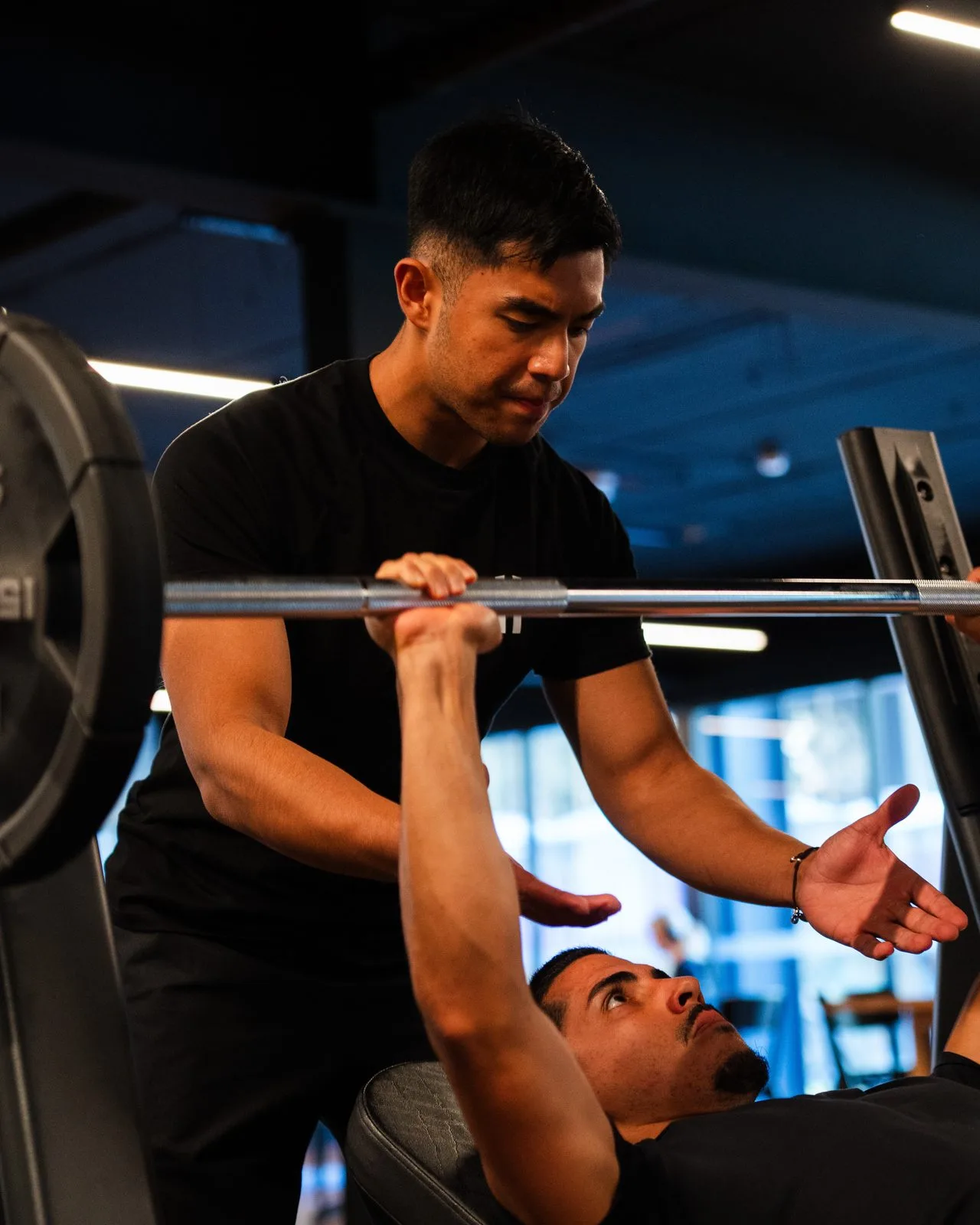
Strength training also suits people who find long cardio sessions hard to face. Sets are short, rest is built in, and progress is easy to see: more reps, or a little more weight, from one week to the next. Our coaches can show you the main lifts.
How much exercise do you need for mental health?
Less than many people think. In one large analysis, people doing about 2.5 hours of brisk walking a week had a 25% lower risk of depression than inactive people. Even half that amount was linked with an 18% lower risk.
That 2022 meta-analysis in JAMA Psychiatry pooled 15 long-term studies with 191,130 participants. It looked at who went on to develop depression. These were observational studies, so they show a link, not proof that activity caused the lower risk. The largest gains came at the low end: moving from nothing to something.
Australia's 24-Hour Movement Guidelines suggest adults do:
- moderate to vigorous activity for 30 minutes or more on most days, adding up to 2.5 hours or more a week
- muscle-strengthening activities on 2 or more days a week
- activities for mobility, balance and coordination on 3 or more days a week
The guidelines also note that for anyone not meeting them yet, progressing towards any of the recommendations brings some health benefits.
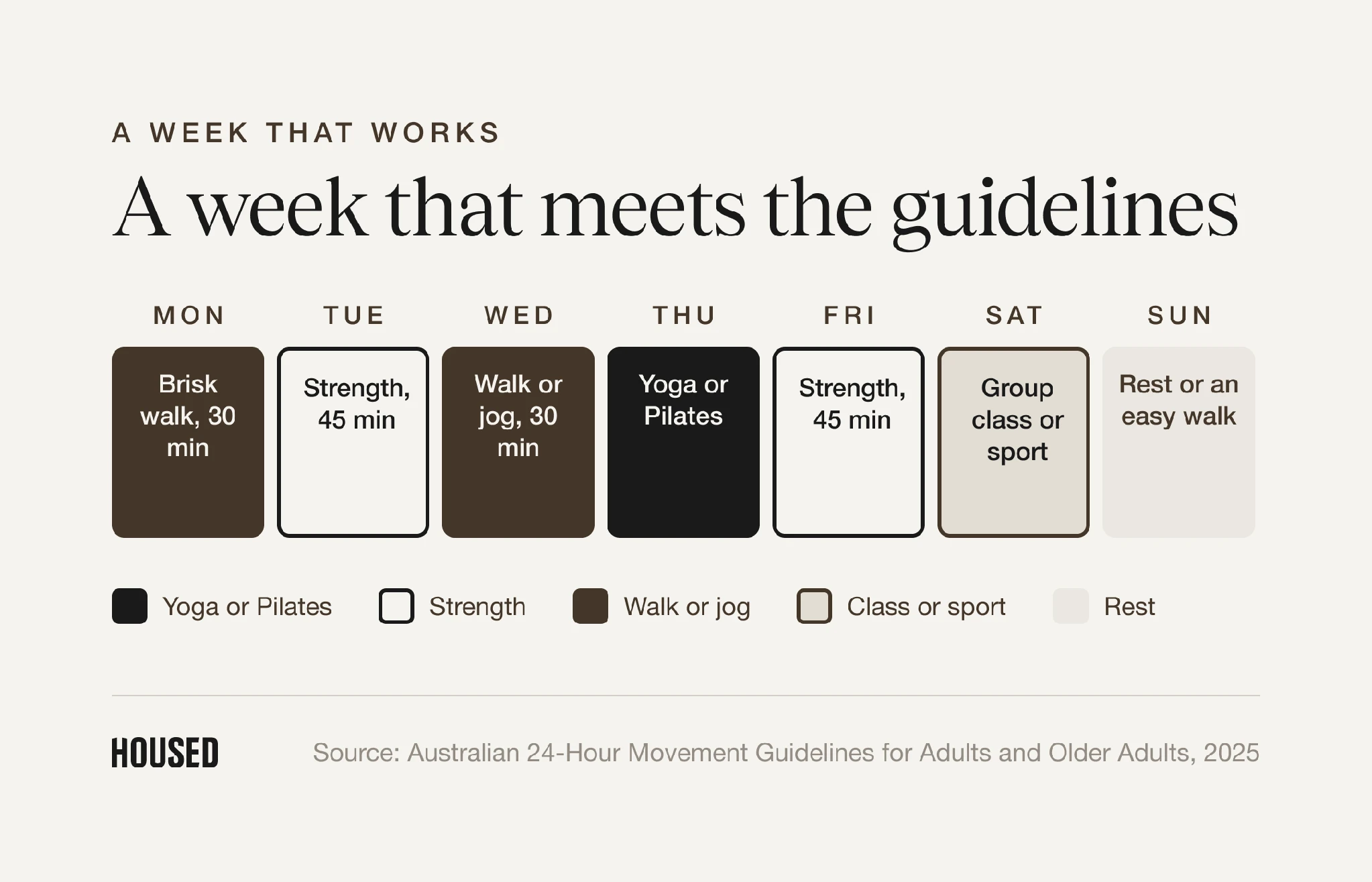
A week like the one below covers it: a brisk walk or a jog on two days, strength training on two, a yoga or Pilates class, a group class or sport at the weekend, and a rest or easy walk on the seventh day.
Does exercise help with stress?
Exercise can help. In the 2023 umbrella review, physical activity had a medium-sized effect on psychological distress, the broader feeling of being stressed, worried or overwhelmed.
The review measured distress across a wide range of adults, including the general population. Compared with usual care, the pooled effect size for psychological distress was -0.60, slightly larger than the effects for depression and anxiety.
Healthdirect lists reducing stress and sleeping better among the ways regular physical activity can help.
A few ways to use exercise for stress, so a session works as a break:
- Leave your phone in the locker for the first part of the session.
- Pick something rhythmic, such as rowing, cycling or a brisk walk on an incline treadmill.
- Book a class, so someone else plans the session and you only have to turn up.
- Finish with a few minutes of easy movement or stretching before you head back to your day.
None of these is a treatment for a stress or anxiety disorder. If stress is affecting your sleep, work or relationships for weeks at a time, talk to your GP.
Can exercise help with anxiety?
Exercise can help ease symptoms of anxiety. In the 2023 umbrella review, physical activity had a medium-sized effect on anxiety symptoms, close to its effect on depression. It is not a replacement for treatment of an anxiety disorder.
The 2023 umbrella review is one of the largest summaries of research on exercise and anxiety. It reported a median effect size of -0.42 for anxiety, against -0.43 for depression, compared with usual care. The benefits showed up across healthy adults, people with mental health disorders and people with chronic disease.
Healthdirect lists preventing and reducing symptoms of mental health conditions, such as depression and anxiety, among the benefits of regular exercise.
If anxiety makes a busy gym feel hard to walk into, start where it feels manageable:
- Train at a quieter time. Ask the club team when the floor is usually calmest.
- Learn the space first. Walk the floor and find the equipment you plan to use before you start.
- Pick a simple, repeatable session. The same few exercises each visit, so there is less to think about.
- Book a class or a coach. Someone else leads, and you follow.
If anxiety is stopping you from doing things you need or want to do, talk to your GP.
Does exercise intensity matter for mental health?
It seems to. Both large reviews found that higher-intensity exercise was linked with greater improvements in symptoms. But a session you can repeat matters more than a hard session you dread.
In the 2024 BMJ analysis, the effects of exercise were proportional to the intensity prescribed. The 2023 umbrella review also found higher-intensity physical activity was associated with greater improvements in depression, anxiety and distress.
That does not mean every session needs to be exhausting. Australia's guidelines describe moderate intensity as a 5 or 6 out of 10 for effort, where you are out of breath but can still hold a conversation. Vigorous intensity is a 7 or 8, where it is tricky to talk.
A sensible way to apply it:
- Start at moderate. Brisk walking, easy cycling or light weights.
- Build consistency for a few weeks. Turning up is the first goal.
- Add some harder work. A few faster intervals, or sets that finish close to your limit with good form.
Healthdirect's advice for anyone new is to start slowly, in a setting where you feel comfortable, with an activity you enjoy. It also notes that exercise should not be painful.
How long does it take for exercise to affect mood?
Trials in these reviews mostly ran for weeks to months, not days, so plan on regular exercise over at least a few weeks. Interestingly, shorter programs showed larger effects than longer ones in the 2023 review.
The 2023 umbrella review found that the effectiveness of physical activity programs diminished with longer durations. The review does not tell us why. One reason may be that it is harder to keep people engaged in a study for a long time.
What this means for you: give a new routine a fair trial. Six to twelve weeks of regular training is long enough to judge whether it suits you, and long enough to build the habit.
Keep a simple note of how you feel on a scale of 1 to 10 before and after each session. Over a few weeks, the notes show you a pattern that a single day cannot.
Is group exercise better for mental health than training alone?
The research above does not settle whether group or solo exercise is better for mood. Most trials compared exercise with no exercise. What matters most is choosing a format you will keep coming back to.
Training with others does solve some common problems. A class has a set time, so the decision about when to train is already made. A coach plans the session, so there is nothing to work out on a low day. And other people notice when you are there.
Training alone suits people who want quiet time, or who need to fit a session around shifts and family. Both count.
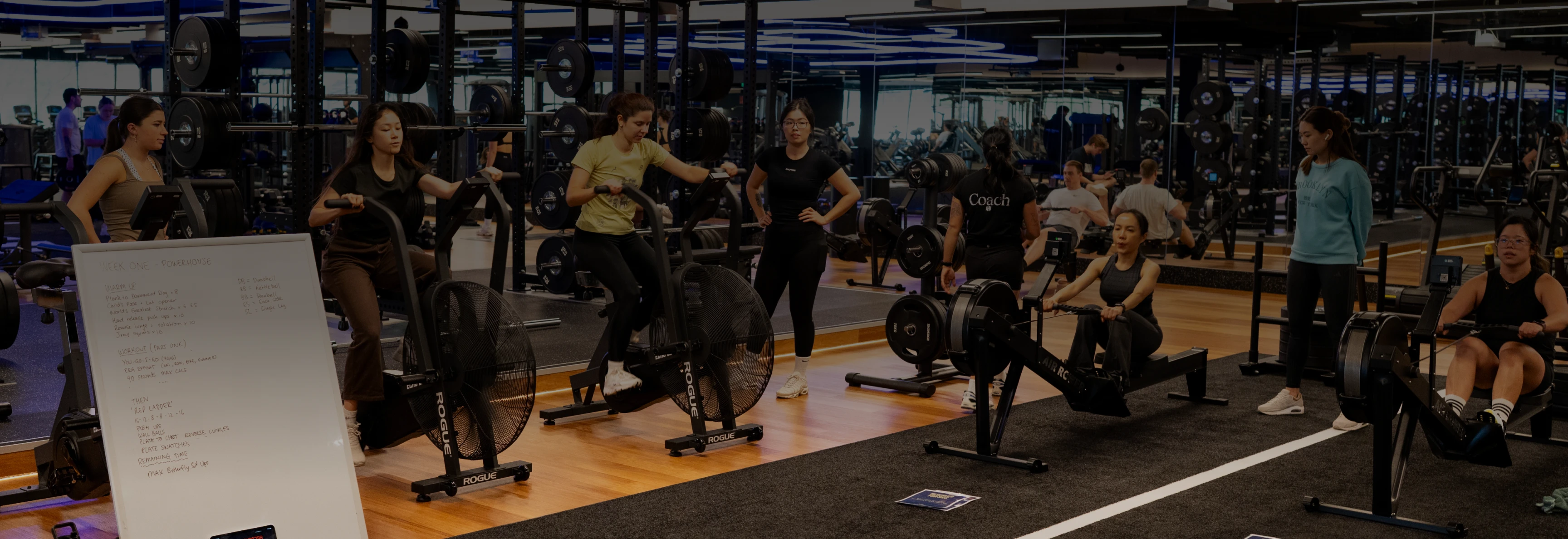
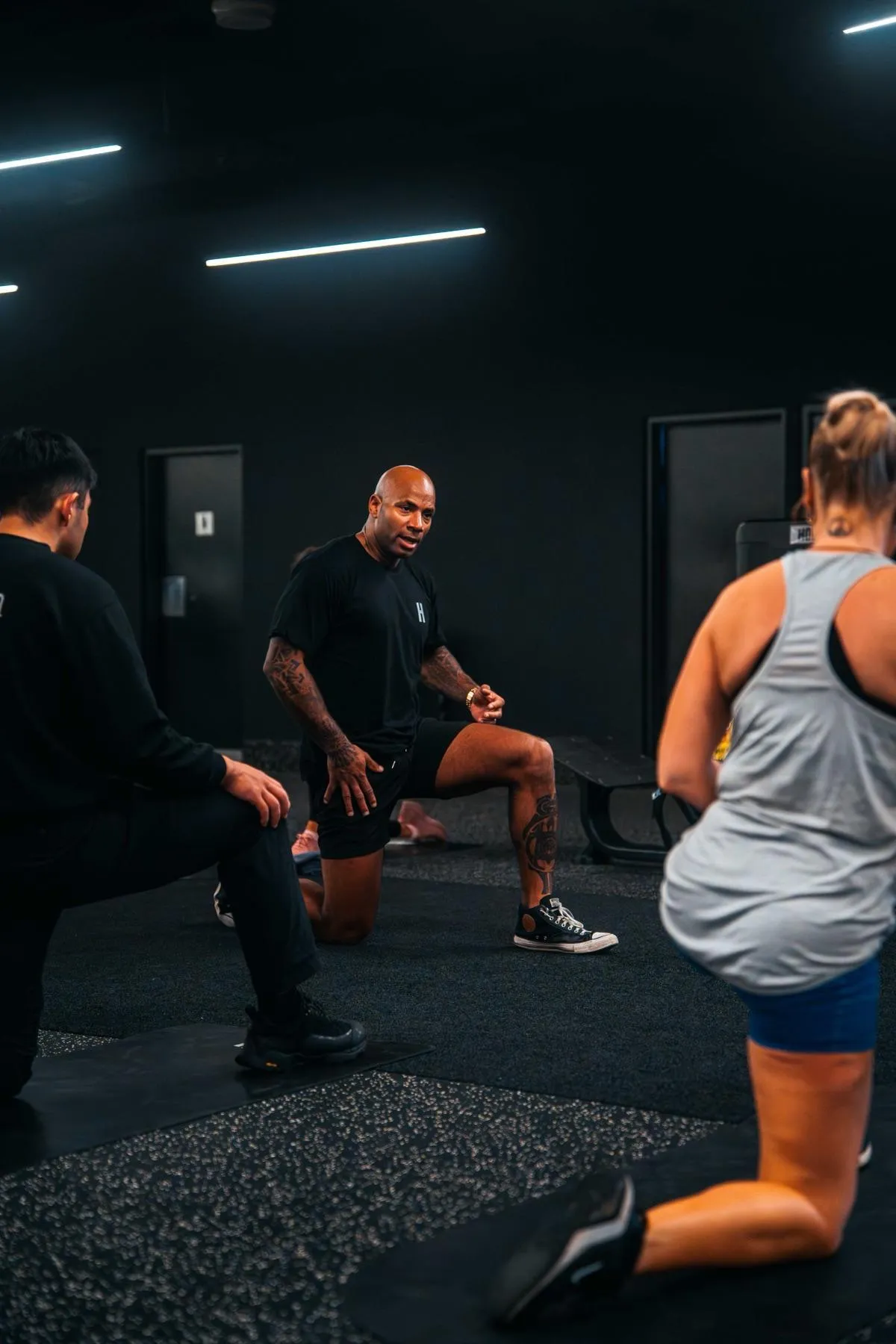
At Housed, Group Training runs at Macquarie Park and Penrith, with strength and cardio classes for all levels. Reformer Pilates classes run at all our gym clubs and Pilates studios, and yoga runs at Macquarie Park. Find a class at your club on the timetable. For more on why classes help people stay consistent, read how group fitness classes help you stay consistent.
How do you start exercising when your mood is low?
Start smaller than you think you need to. A 10-minute walk, or one short session a week, counts. The aim of the first few weeks is to make exercise a regular part of your week, not to make it hard.
Australia's guidelines advise starting with small amounts of activity and building up the frequency, intensity or duration over time. On low days, the hardest part is often the decision to start, so make that decision easier:
- Put it in your calendar. Same days, same time, like any appointment.
- Lower the bar. Tell yourself you only have to do 10 minutes. You can stop after that.
- Pack the night before. Shoes, water bottle and towel by the door.
- Train with someone. A friend, a class or a coach.
- Count turning up as the win. Not the weight, the pace or the calories.
This week, pick two days and a time. Walk briskly for 20 minutes on each. Next week, add a third day or a strength session. Build from there.
Sources
- 01Singh B, Olds T, Curtis R, et al. "Effectiveness of Physical Activity Interventions for Improving Depression, Anxiety and Distress: An Overview of Systematic Reviews." British Journal of Sports Medicine 57(18):1203-1209, 2023. doi.org/10.1136/bjsports-2022-106195
- 02Noetel M, Sanders T, Gallardo-Gómez D, et al. "Effect of Exercise for Depression: Systematic Review and Network Meta-Analysis of Randomised Controlled Trials." BMJ 384:e075847, 2024. doi.org/10.1136/bmj-2023-075847
- 03Gordon BR, McDowell CP, Hallgren M, et al. "Association of Efficacy of Resistance Exercise Training With Depressive Symptoms: Meta-analysis and Meta-regression Analysis of Randomized Clinical Trials." JAMA Psychiatry 75(6):566-576, 2018. doi.org/10.1001/jamapsychiatry.2018.0572
- 04Pearce M, Garcia L, Abbas A, et al. "Association Between Physical Activity and Risk of Depression: A Systematic Review and Meta-analysis." JAMA Psychiatry 79(6):550-559, 2022. doi.org/10.1001/jamapsychiatry.2022.0609
- 05University of South Australia. "Exercise more effective than medicines to manage mental health." Media release, 23 February 2023. newswise.com
- 06Australian Government Department of Health, Disability and Ageing. "Australian 24-Hour Movement Guidelines for Adults (18-64 years) and Older Adults (65+ years)." 2025. health.gov.au
- 07Healthdirect Australia. "Exercise and mental health." 2024. healthdirect.gov.au