In this article
HIIT training, or high intensity interval training, alternates short bursts of hard work with periods of easier work or rest. You push hard for a set time, recover, then repeat. The hard parts are short enough that you can keep the effort high, and the rest is what lets you do it again. In fitness, HIIT is popular because a short session can be a demanding one, and it scales to almost any fitness level.
What makes training "high intensity"
Intensity is about effort, not a particular exercise. A useful guide is a 1 to 10 rating of perceived exertion: during the work intervals of a HIIT session you are working at around 7 to 9, breathing hard and unable to hold a conversation. During recovery you drop back to an easy effort until your breathing settles.
Two numbers shape every HIIT session:
- The work-to-rest ratio. 1:2 means twice as much rest as work, for example 20 seconds hard and 40 seconds easy. 1:1 is harder, and more work than rest is harder still.
- The number of rounds. More rounds add volume. Add rounds only when you can keep the quality of each effort.
Good HIIT exercises
The simplest high intensity interval training exercises are ones you can do hard without your technique falling apart:
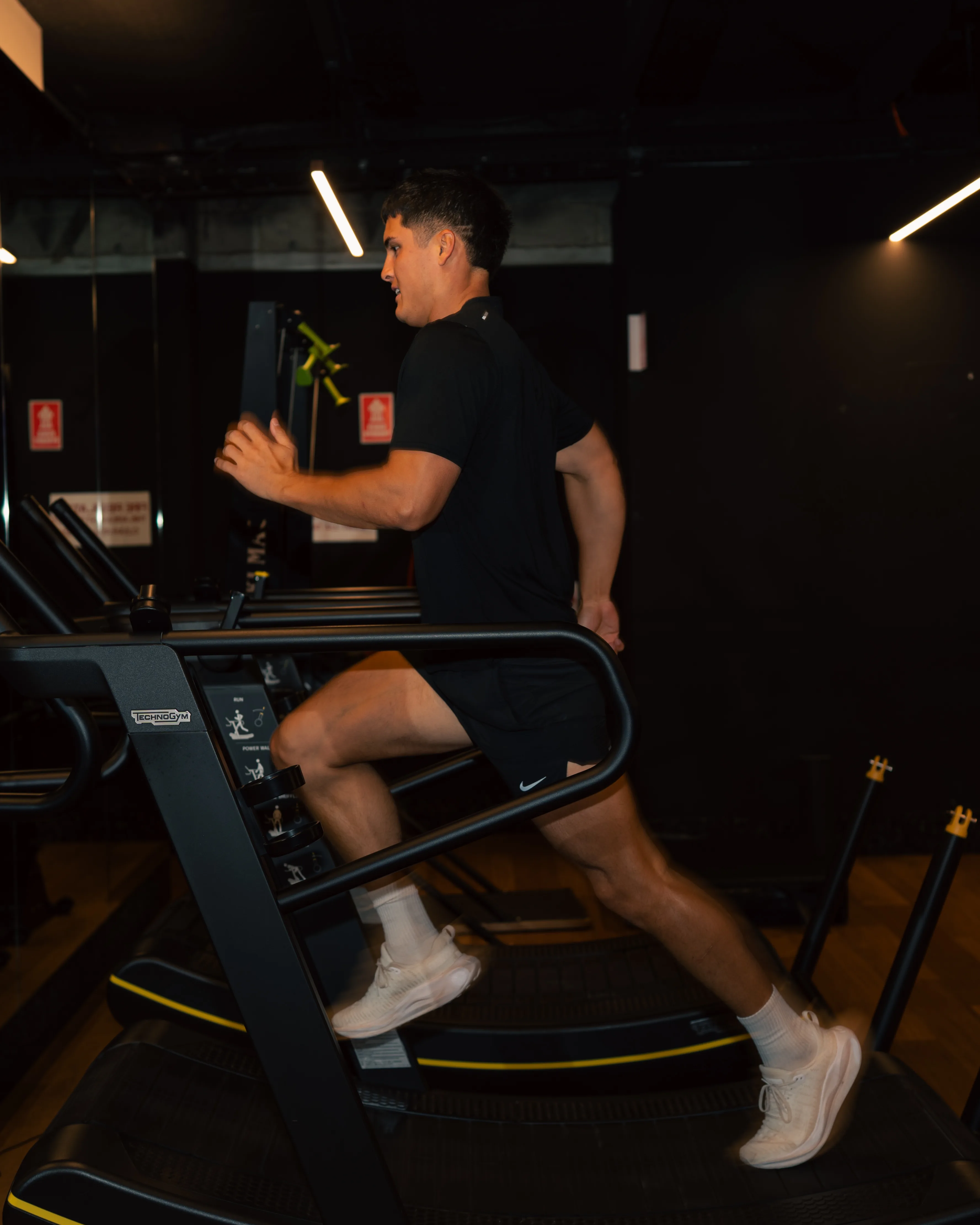
- Machines: bike, rower, ski erg and treadmill. They are easy to scale and low on impact.
- Body weight: squats, reverse lunges, mountain climbers, step-back burpees and fast step-ups.
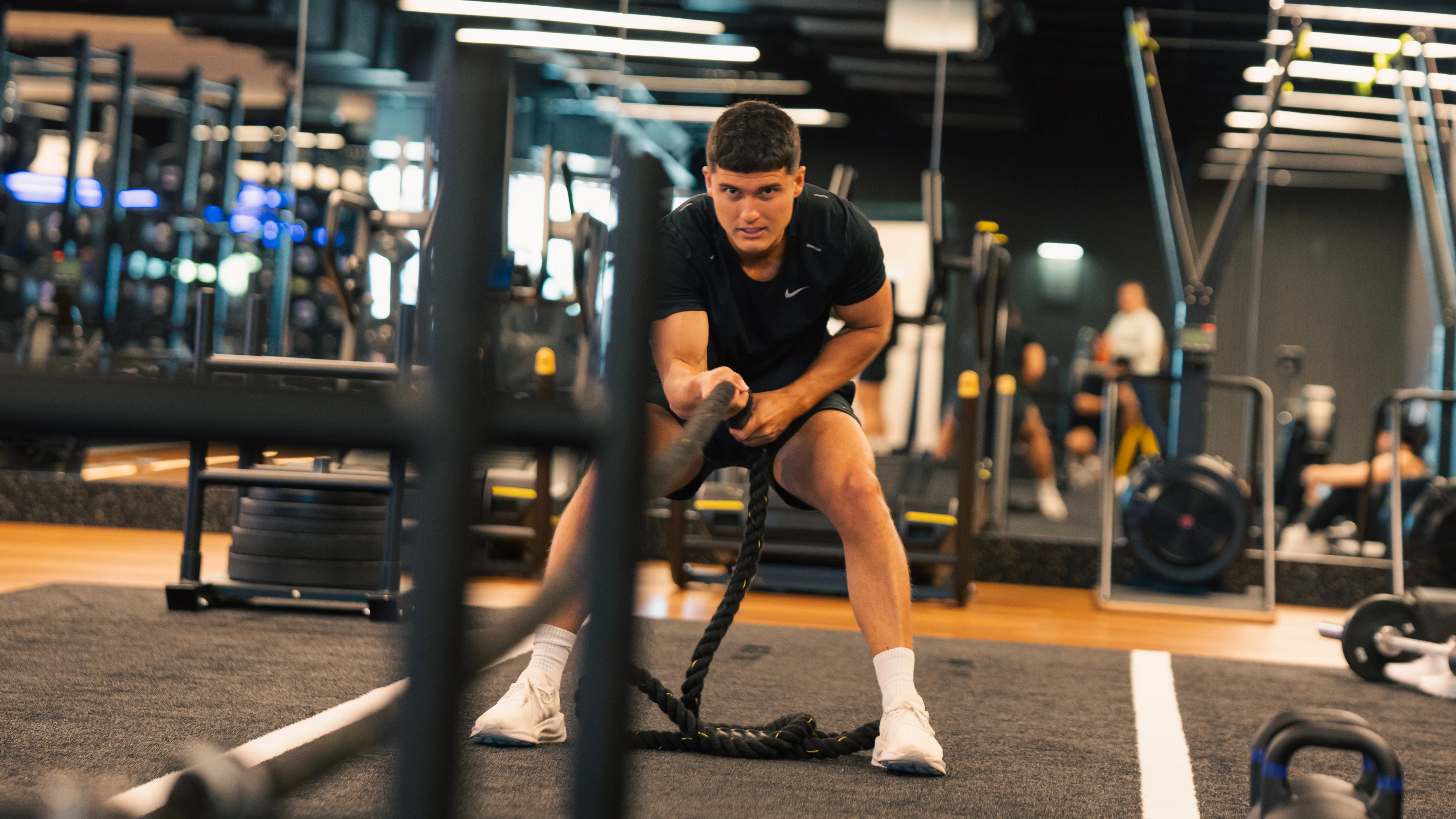
- Equipment: kettlebell swings, wall balls, battle ropes, sled pushes and medicine ball slams.
Save complex lifts, such as heavy barbell work, for strength sessions. Under fatigue, technique on those slips quickly.
Sample HIIT sessions
Each session starts with 8 to 10 minutes of warm-up: easy cardio, then a few faster efforts and the movements you are about to use. Each ends with a few minutes of easy movement.
Starting out: bike intervals
- 20 seconds hard, 40 seconds easy
- 8 rounds, about 8 minutes of intervals
- Aim to keep every effort about the same
Building up: mixed circuit
- 30 seconds of work, 30 seconds of rest
- Rower, goblet squats, mountain climbers, kettlebell swings
- 3 rounds of the four stations, with 2 minutes of rest between rounds
More experienced: longer efforts
- 2 minutes hard on the rower or ski erg, 1 minute easy
- 5 to 6 rounds
- The pace should feel challenging but repeatable, not an all-out sprint
How to scale HIIT to your fitness level
You can make any session easier or harder without changing the exercises:
- More rest. Move from 1:1 to 1:2 or 1:3.
- Fewer rounds. Stop one or two rounds before your form drops.
- Lower impact. Swap jumps for step-ups and burpees for step-back burpees, or move to a bike.
- Less load. A lighter kettlebell or a slower sled.
Progress one thing at a time, and only after a session has felt controlled for a week or two.
How often to do HIIT
HIIT is demanding, so more is not always better. For most people one to three sessions a week, with lower-intensity days between them, is enough. Fill the rest of the week with strength training, walking or easier cardio. Back-to-back hard days tend to make the efforts slower and raise the risk of overdoing it.
Training hard, safely
- Warm up every time. Cold muscles and joints do not handle sudden sprints well.
- Technique first. If a movement starts to look ragged, slow down, rest longer or switch to a simpler option.
- Know when to stop. Chest pain, dizziness, unusual breathlessness or feeling faint mean stop straight away and seek medical help.
- Check with your GP first if you have a heart condition, high blood pressure, another medical condition, are pregnant, or are new to exercise. A physio can help you work around an injury.
HIIT and group training at Housed
At Housed, Cardio is the high-intensity interval training class: high-output intervals on rowers, ski ergs and bikes, with short, sharp efforts and structured rest. Cardio Endurance uses longer intervals to build stamina, and Cardio Sprint uses short, high-intensity efforts to build speed, power and recovery. Athletic Conditioning works intervals on rowers, ski ergs and assault bikes, and HYROX Training pairs running intervals with functional stations. Team Hybrid combines strength and conditioning in partner-based rounds.
If you are new to group training, start with Foundations or Team Hybrid to build technique and confidence. Group training is included with Home and Full House memberships at participating clubs. See every class on the group training page, check times on the class timetable, or read the HYROX guide for beginners. New to Housed? An eligible first-time visitor can request a Housed free pass at selected clubs.
Common questions
Is HIIT good for weight loss?
HIIT can be part of a weight loss plan because it is a time-efficient way to train hard. Results depend far more on what you do across the whole week, including strength training, everyday movement, eating and sleep, than on any one type of workout.
How long should a HIIT session be?
The intervals themselves often take 10 to 25 minutes. With a proper warm-up and cool-down, most sessions run 30 to 45 minutes.
Can beginners do HIIT?
Yes, with more rest, fewer rounds and low-impact exercises. Build a base of regular activity first, and check with your GP if you have any health concerns.
Is HIIT better than steady cardio?
Neither is better for everyone. HIIT packs more effort into less time, while steady cardio is easier to recover from and to do more often. Many people do both each week.