In this article
Pilates core exercises train the muscles that wrap around your trunk, not only the ones you can see. The moves below work your abs, obliques, back and the deep core muscles under them. Each one starts on the mat, most have a reformer version, and all of them depend more on control than on how many reps you do.
What your core is, and why Pilates suits it
Your core is more than a six-pack. It includes the deep abdominal muscles that brace your trunk, the obliques at your sides, the muscles along your spine, your diaphragm above and your pelvic floor below. Together they keep your spine steady while your arms and legs move.
Pilates trains the core this way: you engage your core so the trunk stays still and controlled while the limbs reach, lift and lower. That makes it a useful partner to gym training, running and group classes. For more on what Pilates can do for your body, read the Pilates for beginners guide.
Three form cues before you start
- 01Breathe out on the effort. Breathe in through your nose to prepare and out through your mouth as you move. Never hold your breath.
- 02Find neutral, then keep it. Lying on your back, your lower back keeps a small natural curve. If it presses hard into the mat or arches up, make the move smaller.
- 03Slow beats many. Take three to five counts for each part of the movement. If your form slips, stop the set there.
Pilates mat exercises for your core
You need a mat and some floor space. Start with six to eight slow reps of each, or six to eight on each side.
Dead bug
Lie on your back with your arms reaching to the ceiling and your knees bent over your hips. Breathe out as you lower one arm behind you and the opposite leg towards the floor. Go only as far as your lower back stays steady, then return and swap sides. This is one of the simplest Pilates moves for abs, and a good place to start with Pilates for abs if you are new to it.
Bird dog
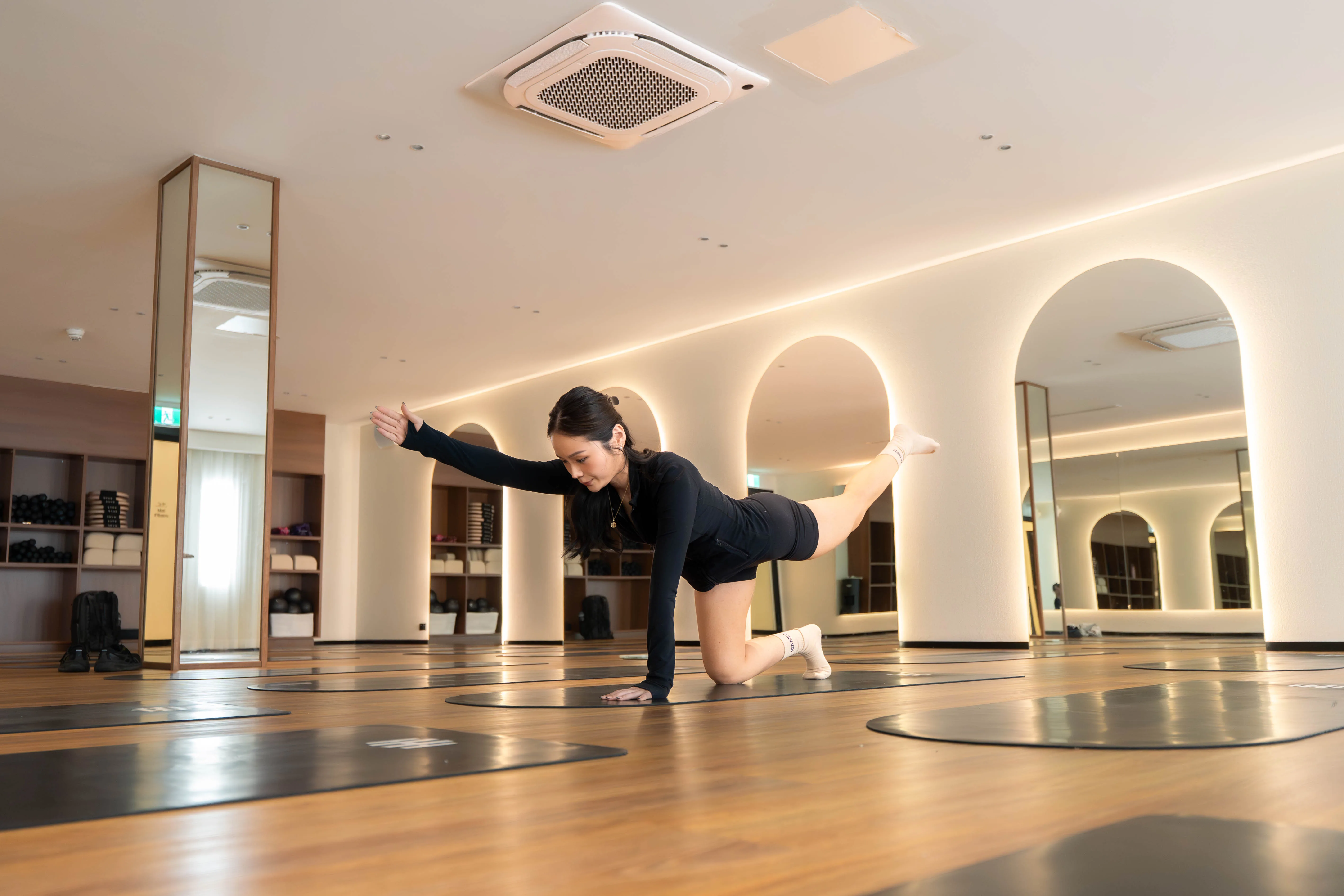
Start on hands and knees, hands under shoulders and knees under hips. Reach one arm forward and the opposite leg back until both are level with your trunk. Keep your hips square to the floor, as if a glass of water were balanced on your lower back. Return and swap.
Single-leg stretch
Lie on your back, lift your head and shoulders, and draw one knee in while the other leg reaches long at a height you can control. Switch legs with a steady rhythm. Keep your head down and your legs higher if your neck or back works too hard.
The hundred
Lift your head and shoulders, reach your arms long by your sides and hold your legs in tabletop, with knees bent over hips. Pump your arms in small movements, breathing in for five pumps and out for five. Build up slowly towards ten breaths. Extend your legs only when your lower back stays steady.
Side plank
Lie on your side, propped on your forearm with your elbow under your shoulder. Start with your knees bent and lift your hips so your body forms a straight line from knees to head. Hold for a few slow breaths. Straighten your legs when the bent-knee version feels easy.
Swimming
Lie face down with your arms reaching forward. Lift your chest, arms and legs a little and flutter opposite arm and leg in small movements. Keep your neck long and your gaze on the mat. This works the back of your core, which is easy to forget.
Reformer variations
The reformer's springs can make a move harder or easier, and the moving carriage shows straight away when your control drops. In a reformer class, the instructor can help you choose the springs for each exercise.
- Knee stretches. Kneeling on the carriage with your hands on the frame, you press the carriage back and draw it in using your trunk, not just your legs.
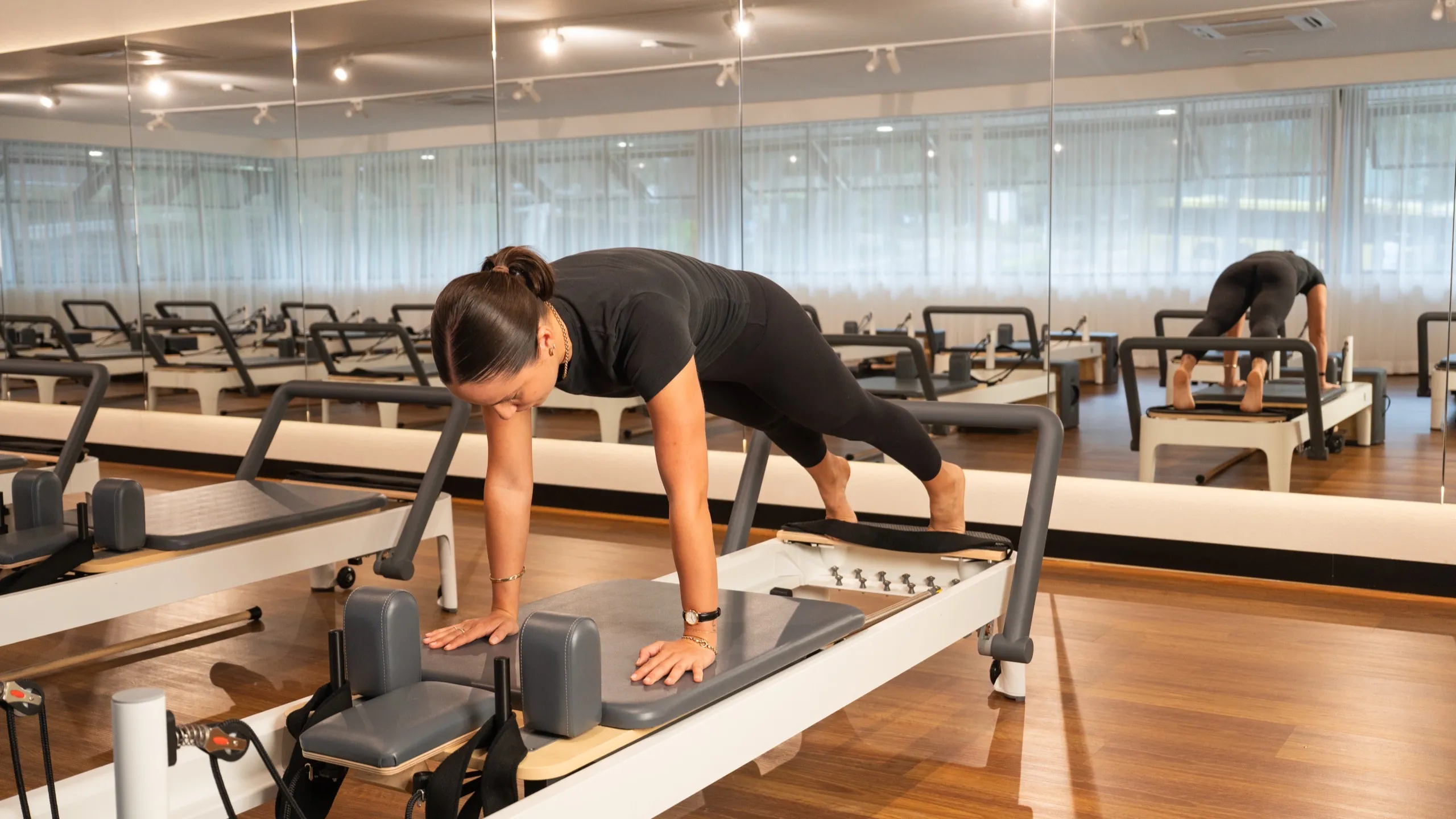
- Plank on the reformer. Hands on the frame and feet on the carriage, you hold a long, still line while the springs try to move you.
- Feet in straps. Lying on your back with your feet in the straps, you lower and lift your legs while your pelvis stays still: a reformer version of the dead bug.
- Side work. Kneeling or sitting side-on, you work the obliques with the springs adding load or support.
Ask your instructor before using a new spring setting. A lighter spring is not always easier: on many core exercises it asks for more control.
A 15-minute Pilates core sequence
Use this on a rest day or after a gym session:
- 01Dead bug - 8 each side
- 02Bird dog - 8 each side
- 03Single-leg stretch - 10 in total
- 04The hundred - 5 to 10 breaths
- 05Side plank - 3 to 5 breaths each side
- 06Swimming - 10 to 20 small flutters
Rest for about a minute, then repeat the sequence once or twice if your form holds.
How often to do Pilates core exercises
For most people, two to three sessions a week is a sensible place to start. A short core sequence can also sit at the end of a gym or group training session. Your core needs recovery like any other muscle group, so aim for at least one easier day between harder sessions. Progress over weeks, not days: add reps, slow the tempo or move to a harder version only when the current one feels controlled.
Pilates for your core at Housed
Reformer Pilates classes at Housed run at three levels: Beginner, Intermediate and Advanced. Start at Beginner if the reformer is new to you. At Housed Macquarie Park there are also mat Pilates classes: Burn, Flow and Restore. Flow targets the core and deep stabilising muscles, and Burn challenges muscular endurance and core strength. Mat Pilates runs at Housed Macquarie Park only.
Find a studio and the memberships that include Pilates on the Pilates page, book a class on the class timetable, or, if you are an eligible first-time visitor, request a Housed free pass at selected clubs.
Common questions
Can Pilates give you a flat stomach?
No exercise burns fat from one area. Pilates core exercises build strength and control in your trunk, which can change how you stand and move, but how your stomach looks also depends on your overall activity, eating, sleep and genetics.
Is Pilates good for your abs?
Yes. Many Pilates moves for the core, such as the hundred and the single-leg stretch, work the abdominal muscles hard, and they also train the deep muscles that support your spine.
Is mat or reformer Pilates better for the core?
Both work well. The mat uses your body weight, so you can practise anywhere. The reformer's springs can add load or support, which helps you progress. Many people do both.
Is Pilates core work safe with back pain or after pregnancy?
It can be, but check with your GP or physiotherapist first, and tell your instructor before class so they can adjust the exercises for you.